How to make my own
Laundry Detergent
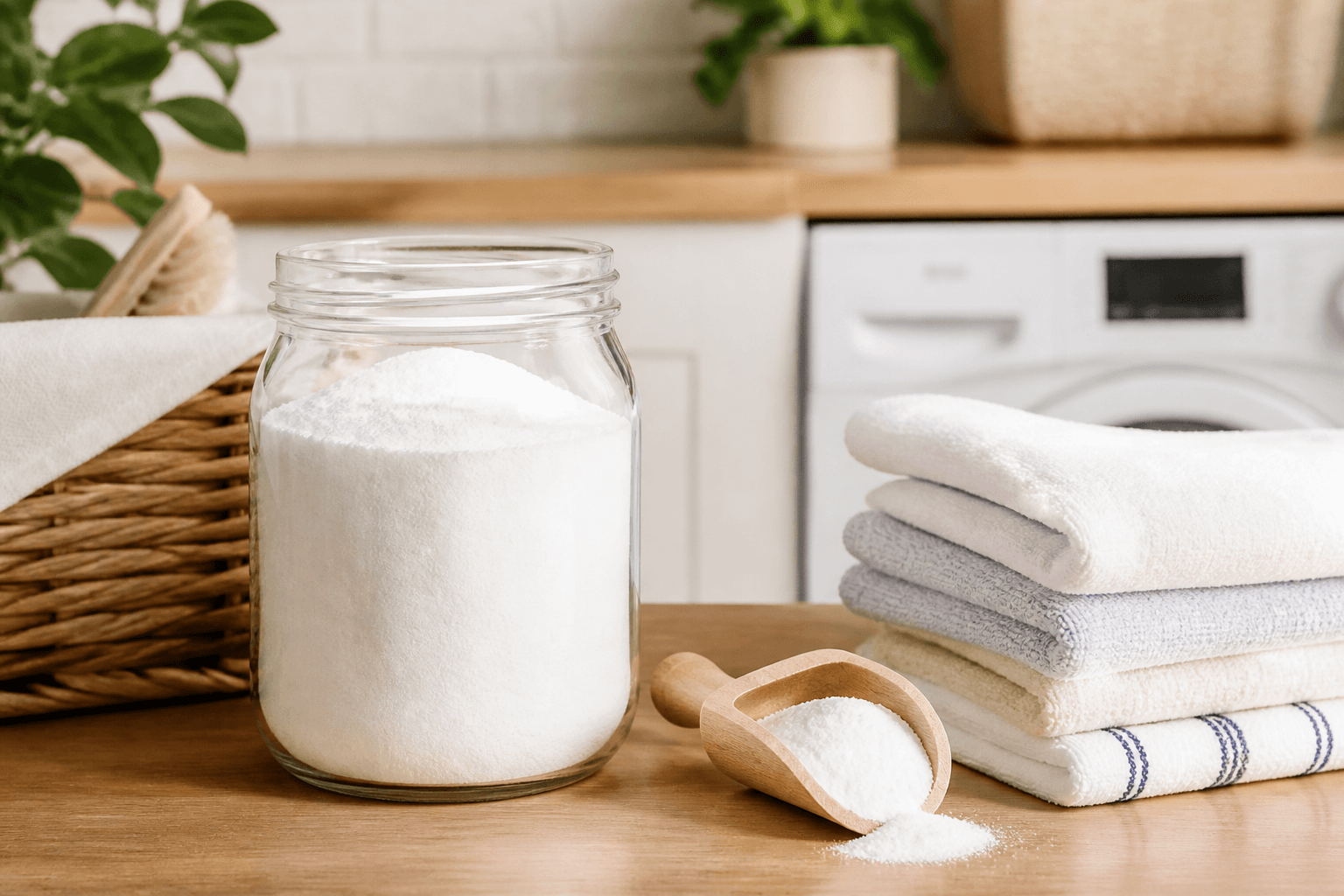
A small-batch washing-soda powder for everyday cotton. No mystery slurry, no essential-oil dump.
Project At-A-Glance
- Difficulty
- easy
- Active Time
- 11 min
- Total Time
- 20 min
- Yield
- 1 jar powder
Materials & Tools
Store jugs are surfactant plus perfume. A homemade powder will not clone Tide, and it should not try. It is a builder (washing soda) plus a little soap, used on cotton and linen — not on silk, wool, or a high-efficiency machine that hates suds.
If your water is very hard, this mix underperforms. Test one towel load before you commit a month of laundry.
Step-by-step
Step 1: Confirm you have washing soda
Confirm you have washing soda. Baking soda is a different salt and will not lift the same soil.
Step 2: Grate the bar on the small holes until you have a pac…
Grate the bar on the small holes until you have a packed cup. Let it sit 10 minutes so it is not damp.
Step 3: Mix washing soda, grated soap, and borax if you are u…
Mix washing soda, grated soap, and borax if you are using it. Break clumps with a fork.
Step 4: Store sealed and dry
Store sealed and dry. Humidity turns this into a brick.
Step 5: Top-loader: 1 tablespoon in the drum with the clothes…
Top-loader: 1 tablespoon in the drum with the clothes, warm water for greasy loads. Front-loader / HE: 1 teaspoon, and only if the manual allows powdered soap. Too much foam is the failure mode.
Step 6: Skip this mix on baby sleepwear with flame retardants…
Skip this mix on baby sleepwear with flame retardants, silk, and anything labelled dry-clean. Those are different chemistries.
Email me the checklist
Checklist email is coming soon — use Print / save PDF for now, or check the materials list above.
Notes
- Washing soda is alkaline. Gloves if your skin cracks. Keep it off marble and aluminium.
- This will not remove set-in oil the way a modern detergent does. Pretreat cuffs with a dab of dish soap.
- Do not pour leftover powder into a septic lecture — use modest doses.
FAQ
Helpful resources
Safety note: this is practical DIY guidance, not medical, chemical, or professional advice. Skip anything that feels unsafe for your setup.
Related
- How to make my own Minecraft skinPaint a 64×64 PNG on the official UV layout, keep the outer layer transparent where you need it, then upload it in Java or Bedrock without breaking the model.
- How to make my own embroidery designsTurn a 6 cm doodle into a stitchable motif tonight. Hoop, three strands, backstitch. No machine file.
- How to make my own granolaOven-baked oat clusters with nuts, seeds, and a maple-oil binder. Batch it once, tweak sweetness, and skip the bakery markup.
- How to make my own sourdough starterFlour, water, a jar, and about a week of twice-daily feeds until it doubles on schedule.